Why Norweco Singulair Green Matters for Green Building Projects
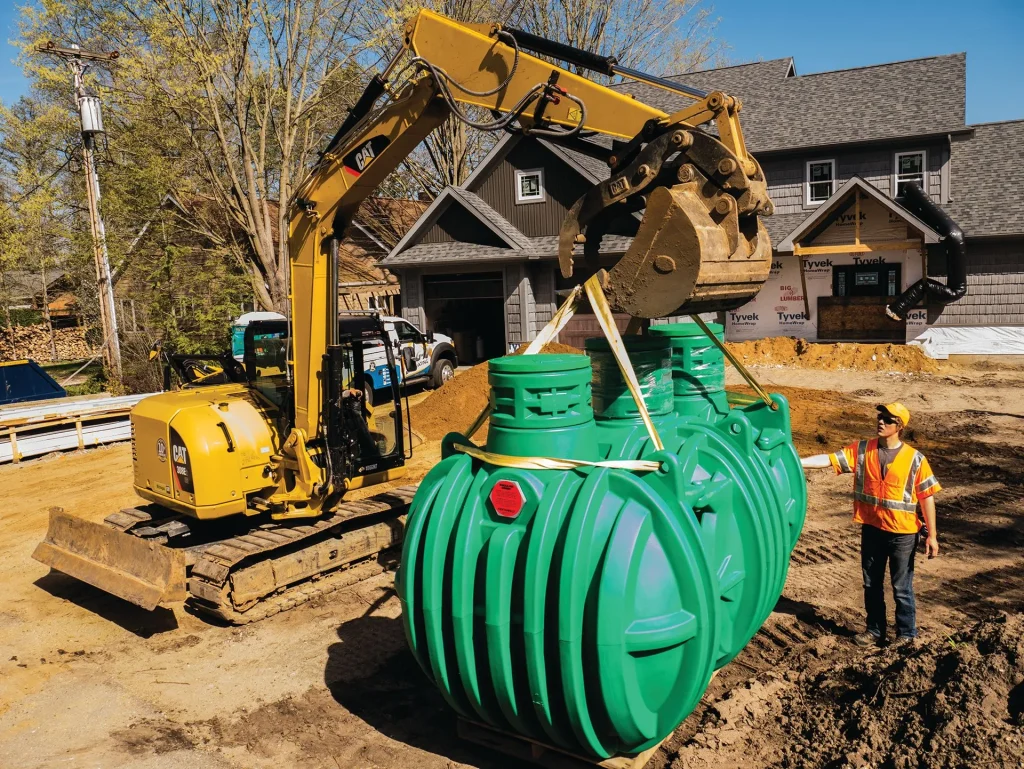
Green building conversations tend to focus on the visible pieces first, insulation levels, glazing performance, heat pumps, solar arrays, low carbon materials. Wastewater treatment sits farther down the list until a project hits a practical constraint: no municipal sewer, difficult soil, a site near water, or a permitting path that demands higher effluent quality than a conventional septic tank can deliver. At that point, wastewater is no longer a background utility. It becomes a design driver.
That is where the norweco singulair green system deserves serious attention.
For the right project, it can solve several problems at once. It can support water quality goals, help protect sensitive sites, make difficult lots more buildable, and align the mechanical side of a project with the broader sustainability story the owner is trying to tell. It is not the right answer for every parcel or every budget, but dismissing advanced onsite treatment as an afterthought is a mistake I have seen more than once. On green building projects especially, wastewater choices can either reinforce the project’s environmental claims or quietly undermine them.
The part of green building people often overlook
A building can have exceptional envelope performance and still create environmental headaches if its wastewater system is poorly matched to the site. Conventional septic systems have a long track record and, on suitable land, they remain a practical and responsible option. The problem is that many green building projects are not on easy land.
They are often in places where owners care deeply about the landscape, near lakes, streams, coastal areas, or wooded lots with shallow soils and high seasonal water tables. Sometimes the architecture is compact and land efficient, which leaves less room for large dispersal areas. In other cases, the owner wants to preserve mature trees, minimize site disturbance, or avoid importing and regrading large amounts of soil. A basic septic tank and gravity field can become difficult to permit, difficult to fit, or difficult to justify if the receiving environment is sensitive.
Advanced treatment changes that conversation. When the wastewater is treated to a higher standard before it reaches the soil dispersal area, the environmental burden on the site can be reduced. That does not eliminate the need for good design or proper permitting, but it can give the project team more room to solve competing goals.
I have seen projects where the wastewater strategy made the difference between a sprawling site plan and a disciplined one. It is easy to underestimate that value when the system is buried and out of sight. Owners notice it later when they realize they were able to preserve more of the lot, avoid a costly redesign, or move ahead on a parcel that looked marginal at first review.
What makes Norweco Singulair Green relevant
Norweco is not a newcomer in the onsite wastewater space. That matters. Green building teams sometimes get drawn toward novel products with polished sustainability language, only to discover later that maintenance support is thin, replacement parts are hard to find, or regulators are unfamiliar with the equipment. In wastewater, established field history matters as much as product literature.
The Singulair line is known in the industry as an aerobic treatment approach designed for residential and light commercial applications where better treatment is needed than a standard septic tank can provide on its own. The “Green” branding speaks to the environmental positioning, but what matters on an actual project is not the label. It is whether the system can deliver dependable treatment performance, fit the site constraints, and be maintained over the long haul.
In practical terms, advanced aerobic treatment introduces oxygen into the treatment process, which supports beneficial biological activity and improves breakdown of wastewater constituents compared with passive settling alone. Better treatment at the tank stage can mean cleaner effluent moving downstream to the dispersal component. For a green building project, that can translate into lower risk to groundwater and nearby surface waters, especially where nutrient sensitivity or poor site conditions are part of the equation.
The point is not that every project needs the same level of treatment. The point is that green building claims should extend below grade. If the project team is specifying high performance everywhere else, wastewater should not be the one major environmental system left at minimum code if site conditions suggest a better approach.
Why higher treatment quality matters on real sites
The environmental argument for better onsite treatment is straightforward, but the real value becomes clearer when you look at common project conditions.
Start with waterfront and near water properties. In these settings, the margin for error is smaller. Even where setbacks are met, owners, reviewers, and neighbors are often more sensitive to the possibility of nutrient loading or bacterial contamination. A higher quality treatment system does not erase those concerns, but it gives the team a stronger basis for saying the wastewater strategy matches the ecological sensitivity of the parcel.
Now consider small or awkwardly shaped lots. Urban infill and compact rural development both create sites where space is precious. If treatment quality is improved upstream, the overall design may become more flexible depending on local regulations and soil conditions. That flexibility can preserve buildable area, protect tree root norweco singulair green zones, or reduce grading impacts. Those are not abstract sustainability wins. They affect the footprint of the home, the size of the disturbed area, and the project’s total cost.
There is also the issue of resilience. Conventional septic systems are often described as simple, which they are, but simplicity is not the same as suitability. On challenging sites, a basic system can spend years operating near the edge of what the property can comfortably support. When occupancy patterns shift, seasonal wetness increases, or maintenance slips, performance can suffer. A well designed advanced treatment system introduces more components and more responsibility, but it can also provide a wider performance margin where that margin is needed.
That trade off deserves a frank conversation with owners. Some people hear “green” and assume maintenance free. Wastewater does not work that way. Responsible design is not about pretending complexity disappears. It is about choosing the right level of system for the environmental conditions and the owner’s willingness to care for it properly.
Green building is about systems, not slogans
One of the weaknesses in some sustainability conversations is the temptation to treat every product as a standalone virtue. A project gets points for efficient fixtures, points for low VOC finishes, points for renewable energy, and so on. That accounting mindset can be useful, but it can also hide interdependencies.
Wastewater interacts with plumbing fixture selection, occupancy assumptions, landscape planning, and long term operations. A home with ultra low flow fixtures may reduce daily hydraulic loading, which is generally helpful, but low flow alone does not solve treatment quality concerns if the site is constrained. A property with rainwater harvesting or aggressive stormwater infiltration still needs a wastewater system that will perform under seasonal moisture swings. A conservation oriented owner may be highly motivated, yet their operational discipline does not substitute for a treatment process suited to the land.
This is one reason the norweco singulair green conversation belongs early in design development rather than late in permitting. Once the house footprint, grading plan, driveway alignment, retaining walls, and landscape concept are fixed, wastewater options shrink. Early coordination can uncover opportunities that are easy to miss later. Sometimes that means preserving a better dispersal area. Sometimes it means choosing a different building orientation. Sometimes it means being honest that the project ambition and the lot limitations are out of sync.
The best green projects usually have that kind of cross discipline coordination from the start. The architect, civil engineer, wastewater designer, builder, and owner all understand that buried infrastructure still shapes the project’s environmental performance.
The economics are more nuanced than first cost
Owners naturally compare onsite systems by installation cost first. That is understandable and often necessary. Advanced treatment systems typically cost more up front than a basic septic tank and gravity field. Equipment, controls, service access, and in many jurisdictions a maintenance agreement all add to the budget.
If the comparison stops there, though, it is incomplete.
A system that makes a difficult lot buildable has obvious value. A system that avoids major imported fill, extensive retaining, or a large site redesign also has value, even if it is not captured in the wastewater line item. On projects where preservation of open space or tree canopy is a central goal, reducing disturbance carries real design and market value. In some cases, the premium for advanced treatment is partly offset by savings elsewhere on site.
Long term cost needs similar nuance. An advanced system often requires periodic inspection, service, and component replacement over time. Aerators, pumps, alarms, filters, and control elements are not indefinite life items. That said, poorly matched conventional systems create their own long tail of costs through drainfield stress, wet area remediation, difficult repairs, and reduced property usability. I have watched owners spend years trying to nurse along a system that was never a good fit for the parcel. The lower first cost looked attractive only until the site started telling the truth.
A realistic owner conversation usually lands here: pay more up front and commit to maintenance, or accept lower complexity but only if the site genuinely supports it without compromise. Green building is full of these decisions. Wastewater is no exception.
Where this system tends to shine
Projects most likely to benefit from a system like this usually share one or more of the following conditions.
- The site lacks access to municipal sewer and has environmental sensitivity, such as proximity to water or vulnerable groundwater.
- Soils, topography, or lot geometry make a standard gravity septic layout difficult or land intensive.
- The owner wants the infrastructure choices to reflect the same environmental rigor as the rest of the building.
- Local regulators require enhanced treatment for the parcel, occupancy type, or receiving environment.
- Site disturbance needs to be minimized to preserve landscape features or reduce earthwork.
Even here, judgment matters. A large rural parcel with excellent soils and generous setbacks may not need a more complex system. A small infill lot with poor percolation, on the other hand, may have very little room for compromise. The right answer comes from the site, not from marketing language.
The maintenance conversation that should happen before anyone signs
The fastest way to create disappointment with advanced wastewater treatment is to oversell convenience. Systems like these can perform very well, but they depend on appropriate use and routine service. Owners need to understand that from day one.
That means clear expectations about what should and should not enter the system, how alarms are handled, who performs service, and what records should be kept. It also means explaining that advanced treatment units are pieces of operating equipment, not inert tanks. They need electricity. They need periodic attention. They work best when the household uses water in a reasonably consistent way rather than in extreme surges.
In practice, most owners adapt quickly if the system is explained well. Trouble starts when a house is sold and the next owner inherits equipment without context, or when a builder treats the wastewater system as the last subcontractor scope to be discussed. Good handoff matters. So does local service support. Before specifying any advanced treatment equipment, I want to know who will maintain it, how quickly replacement parts are available, and whether the local permitting authority is comfortable with the product.
This is where established manufacturers often hold an advantage. Familiarity reduces friction. Inspectors know what they are reviewing. Service providers know what they are working on. Owners are not left with an orphaned system if the original installer disappears.
How it supports broader sustainability goals
The strongest case for norweco singulair green is not that it singlehandedly makes a project sustainable. No wastewater system can carry that burden alone. Its importance lies in how it supports broader goals without forcing major compromises elsewhere.
For water quality, the benefit is direct. Better treatment upstream helps reduce the load reaching the dispersal area and, by extension, the surrounding environment. On sensitive sites, that matters a great deal.
For land stewardship, advanced treatment can preserve flexibility. If a project can meet regulatory requirements with less disruption to the lot, the team may keep more native vegetation, reduce grading, and maintain better stormwater behavior. Those are meaningful site scale outcomes.
For design integrity, the system helps the back of house match the front of house. A project that presents itself as environmentally responsible should not rely on a wastewater strategy chosen solely because it was familiar or slightly cheaper in the first round of pricing. Owners notice when the infrastructure decisions feel coherent.
For long term performance, a properly maintained advanced system can create confidence where a marginal conventional layout would leave ongoing worry. That peace of mind has value, especially for clients building near water or planning to hold a property for many years.
Questions worth asking before specifying it
A wastewater decision should be grounded in site specific facts. Before moving forward with any advanced treatment approach, I advise project teams to push through a few practical questions. What are the local soil and groundwater conditions across seasons, not just on the day of testing? What level of treatment is required or advisable given the receiving environment? How much usable area does the parcel truly offer once setbacks, topography, access, and future site use are accounted for? Is there dependable local service for startup and ongoing maintenance? And perhaps most important, is the owner prepared to operate a treatment system rather than simply forget it exists?
Those questions tend to clear away vague preferences quickly. They also help separate projects where advanced treatment is a smart investment from projects where it is merely a fashionable specification.
I have seen teams lose weeks debating product brands when the real issue was that the owner had not accepted the maintenance reality of the site. I have also seen the opposite, where an owner initially resisted the idea of an advanced system, then recognized that it allowed the house to sit lightly on the land and preserve the landscape they cared about most. Once the decision was framed around site protection rather than gadgetry, it made sense.
What experienced teams get right
The projects that handle wastewater well tend to share a certain discipline. They investigate site constraints early. They do not force the civil or wastewater designer to solve an already overdesigned plan. They budget honestly for installation and service. They coordinate electrical, access, grading, and drainage details instead of treating the system as a standalone utility. And they prepare the owner for long term stewardship.
That may sound ordinary, but it is rare enough to matter. Green building projects often involve ambitious clients and high design expectations. Those projects can drift into wishful thinking if no one is willing to say that a parcel has limits. Advanced onsite treatment can expand options, but it is not magic. It works best when paired with realistic occupancy assumptions, careful siting, and competent maintenance.
When those pieces come together, the result is impressive precisely because it is quiet. The house performs. The site remains healthy. The owner is not dealing with odors, surfacing effluent, or constant worry after heavy rain. The wastewater strategy disappears into the background where it belongs, not because it is unimportant, but because it was handled correctly.
Why it matters more now than it did a decade ago
The pressure on rural and semi rural sites is increasing. Buildable lots are often smaller, more expensive, and more constrained. Review agencies are more alert to water quality impacts in many regions. Homeowners are asking harder questions about environmental responsibility, and in many cases they should be. A green building project is judged not only by the visible finishes and the energy bill, but by whether it respects the landscape that supports it.
That raises the importance of systems like norweco singulair green. They are part of a more mature understanding of sustainable building, one that accepts that true performance is holistic. You cannot talk credibly about stewardship while ignoring what leaves the building through the waste line.
For project teams working on challenging parcels, that insight changes design priorities. Wastewater moves earlier in the conversation. Site norweco singulair green planning becomes more honest. Owners make decisions based on life cycle practicality rather than first impressions. And the project gains a better chance of succeeding not just on paper, but in daily use over many years.
That is why this system matters. Not because every project needs it, and not because branding alone makes it special. It matters because green building is only as credible as its least considered system. On the right site, with the right owner and the right maintenance plan, advanced onsite treatment is not a peripheral upgrade. It is one of the clearest ways to align environmental intent with built reality.
Excavating New Jersey LLC
406 County Rd 565, Wantage, NJ 07461, United States
+1 973-791-4284
FAQ About norweco singulair green
How much does a NORWECO septic system cost?
The installed cost depends on the selected unit, engineering, site access, excavation, electrical work, disposal-field design and required approvals. A tank-only price is not a complete installation quote. Ask Excavating New Jersey LLC for a site-specific, itemized estimate that also explains ongoing service costs.
How does a Norweco septic system work?
The Singulair Green uses pretreatment, aeration, clarification and filtration to treat domestic wastewater. In the aeration chamber, oxygen supports bacteria that break down organic material. The Bio-Kinetic unit provides further filtration and flow equalization. Final effluent disposal must follow the property's approved design and applicable requirements.
What is the average lifespan of a septic system?
There is no guaranteed lifespan for every system. Design, installation, soil conditions, wastewater loading and regular maintenance all matter, and mechanical parts may need replacement before the tank. For a Singulair Green system, follow the manufacturer's service schedule and have a qualified provider assess its condition and pumping needs.
Corrections
Spot something wrong? Send it to the desk and it gets fixed in the open.