Why Rural Properties in Wantage NJ Choose Norweco Singulair Green
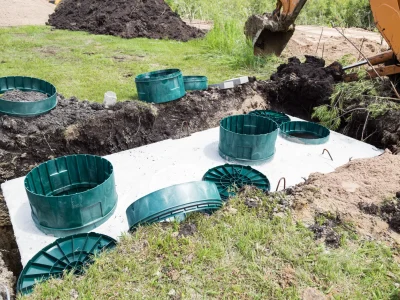
If you spend any time around rural properties in Sussex County, you start to notice that wastewater decisions are never just about what goes underground. They affect whether a lot can be built on, how much maintenance a homeowner will face, how a yard drains after a wet spring, and how comfortably a system handles real life once people move in. In Wantage, those questions come up often because the local conditions are not generic. The land varies, the weather swings, and many homes sit beyond municipal sewer access.
That is where the conversation around the norweco singulair green Wantage NJ system keeps coming up. Property owners, builders, and septic professionals tend to look at it not as a trendy upgrade, but as a practical answer to the kind of site constraints and performance expectations that show up again and again in rural North Jersey. The appeal is not mysterious. It comes down to treatment quality, reliability, footprint, and how well the system fits the realities of country lots.
Why wastewater is a bigger issue on rural lots
On a connected sewer line, most homeowners do not think much about wastewater after they flush. In rural Wantage, they have to. The property itself becomes part of the treatment process, and that means soil, slope, seasonal groundwater, available area, and local regulations all matter.
A conventional septic system can work very well when the site supports it. Good native soils, enough separation to groundwater, proper setbacks, and room for a suitable disposal field all make life easier. But rural parcels are rarely perfect. Some are wooded and irregular. Some have rocky subsurface conditions. Some have high water tables in certain seasons. Others have older homes on lots where there is little room to expand without disturbing wells, driveways, sheds, or mature landscaping.
When a site is tight or sensitive, better pretreatment upstream can make a major difference. That is one reason advanced treatment units have become more common in places like Wantage. They are often chosen not because people want complexity, but because the site demands a higher level of treatment before effluent reaches the dispersal area.
What makes the Singulair Green stand out
The Norweco Singulair Green is an advanced residential treatment system designed to treat household wastewater to a higher standard than a basic septic tank alone. At a practical level, that means it is doing more work before water leaves the treatment unit and moves on to final disposal or dispersal.
Homeowners usually care less about the engineering language and more about what that translates to on the ground. Better treatment can help protect the disposal field, reduce solids and organic loading, and support compliance where local codes or site limitations call for advanced treatment. That matters on rural properties where replacement options are expensive and space is not always as generous as it looks from the road.
There is also a reason installers and service providers tend to speak well of the platform. Systems that are thoughtfully designed, accessible for maintenance, and proven over time tend to stay in circulation. In this field, flashy claims do not last. Equipment survives because it performs in real conditions, through winters, power interruptions, household surges, and the ordinary neglect that many systems experience when owners get busy.
Wantage properties often need flexibility, not just capacity
People sometimes assume that a rural lot has endless room, but in practice many lots in Wantage are constrained in subtle ways. The house location may be fixed by topography. The well placement can limit where treatment components go. Long driveways, retaining walls, drainage swales, and accessory structures eat up usable area. Add required setbacks, and a large lot can suddenly feel small.
This is where an advanced treatment system earns its keep. By improving effluent quality, it can support designs that would be difficult or less desirable with conventional treatment alone. That does not mean every lot automatically qualifies or that advanced treatment erases all site problems. It does mean the designer has more tools available.
I have seen rural projects where the difference between a buildable plan and an expensive redesign came down to treatment performance. On paper, the change looked technical. In real life, it meant preserving a backyard, avoiding a major grading job, or keeping the system far enough from a preferred well location without forcing the house into an awkward spot.
Performance matters more in places with seasonal swings
Wantage sees real winter. Freeze-thaw cycles, snow cover, spring saturation, summer storms, and periods of heavy household use all test a wastewater system in different ways. A lightly used weekend home behaves differently from a full-time residence with a family, laundry, guests, and outdoor cleanup after muddy work or recreation. Rural homes also tend to have usage patterns that spike unexpectedly. Holiday gatherings, hunting season weekends, or children returning home can push flows well above a household’s average.
That is one reason owners often favor treatment systems with a solid track record under variable loading. Consistent treatment is not just a laboratory concept. It affects the long-term health of downstream components. A disposal field is norweco singulair green Wantage NJ expensive to replace, disruptive to the property, and not always easy to relocate. Anything that helps reduce stress on that part of the system deserves attention.
The Singulair Green is often selected because it is meant to provide a controlled treatment process rather than simply settling solids and sending partially treated effluent onward. For rural owners thinking long term, that distinction can matter a great deal.
Better pretreatment can protect the most expensive part of the system
A point that gets overlooked by first-time buyers is that the treatment unit is only part of the story. The drainfield or other dispersal component is where big repair costs often show up. Once soils are overloaded or a field begins to fail, the fix is rarely small. It can mean excavation, engineering, permits, and a long stretch of yard disruption.
Advanced treatment does not guarantee a field will last forever. Nothing does. But cleaner effluent generally gives downstream components a better chance to perform as intended over time. Less suspended material and lower organic loading can translate to less stress at the soil interface.
For homeowners, that is usually the most compelling argument. Not the brochure version, but the practical version: spend money up front on a treatment approach that helps protect the part of the system you really do not want to rebuild.
The rural homeowner mindset favors durable, serviceable equipment
People in rural communities tend to be skeptical in a useful way. They want to know who will service a system, what happens during outages, whether parts are available, and how the unit behaves after years of normal use. A product chosen for Wantage needs to satisfy more than a spec sheet. It has to make sense to the people who live with it.
The Norweco name carries weight partly because it is familiar in the onsite wastewater world. Familiarity matters. Installers know how to work with it. Service providers understand maintenance needs. Health departments and designers have experience reviewing systems that use advanced treatment. That kind of ecosystem matters more than homeowners sometimes realize.
A strong system on its own is not enough if no one nearby wants to service it. Rural buyers are smart to ask practical questions:
- Who installs and services this system locally?
- How often should it be inspected?
- What routine maintenance is expected?
- How does the system respond to power loss?
- What are the likely operating costs over a typical year?
Those are the questions that separate a good fit from a poor one. Often, the answer for the norweco singulair green Wantage NJ market is favorable because the product aligns well with how rural septic planning is actually done.
It can be a strong fit for new construction and replacement work
Not every septic conversation starts with raw land. In fact, many start with an older home. Rural Sussex County has properties with aging septic infrastructure, additions that changed bedroom counts, and lots that no longer fit the assumptions under which the original systems were installed. When owners renovate, expand, or sell, those older systems can come under scrutiny.
A modern advanced treatment unit may be considered because the old approach no longer meets code expectations, the site is constrained, or the owner wants a more robust long-term setup. In replacement scenarios, available area is often tighter than people expect. Trees have matured, patios have been added, and driveways occupy space that once may have been open. If the original field area is compromised, design flexibility becomes valuable.
For new construction, the calculation is slightly different. Builders and homeowners are often trying to use the site efficiently while avoiding expensive surprises later. Choosing an advanced treatment system can be a strategic decision when the lot presents any combination of slope, poor percolation characteristics, or limited usable area.
Maintenance is real, but manageable
There is no honest way to discuss advanced treatment without talking about maintenance. A system that includes mechanical and biological treatment components will not be a complete set-it-and-forget-it arrangement. It needs inspection and routine service. Some owners hear that and immediately lean back toward a basic septic tank, but that comparison is not always fair. Conventional systems also need pumping, responsible use, and periodic evaluation. Many simply get ignored until there is a problem.
What owners usually find is that maintenance on a well-supported advanced system is predictable. That is far better than emergency excavation in February or discovering sewage surfacing near the field after a season of heavy rain. The right mindset is to treat wastewater equipment the way you treat a boiler, well pump, or water treatment setup. It is part of the infrastructure of a rural home.
Typical ownership habits that help any advanced septic system perform well include:
- keeping service appointments on schedule
- avoiding harsh or excessive chemical dumping into drains
- spreading out laundry and other heavy water use when possible
- watching for plumbing leaks that increase unnecessary flow
None of that is burdensome. It is simply part of responsible home ownership, especially on properties that rely on private systems for water and wastewater.
Why cleaner treatment aligns with rural property values
Rural buyers often care deeply about land stewardship, even if they do not use that phrase. They care about their wells, neighboring wells, streams, drainage patterns, and the long-term health of their property. In a place like Wantage, where homes are closely tied to the land around them, wastewater treatment is not abstract. It is environmental management at a household scale.
That does not mean every buyer is driven by idealism. Property value plays a part too. A well-designed, code-compliant, professionally maintained septic system can be a selling point. Buyers are often more comfortable with a documented modern system than with an aging conventional setup of uncertain condition. When an advanced treatment unit is installed correctly and serviced consistently, it can reduce anxiety during inspections, appraisals, and negotiations.
I have seen transactions slow to a crawl over septic uncertainty. Even when the house is attractive, uncertainty below grade spooks buyers. A system with a clear design basis and maintenance history usually inspires more confidence than a field note that says the tank is old but appears functional.
Not every property needs one, and that matters
A balanced view is important here. The Singulair Green is not the right answer for every property. If a lot has excellent soils, abundant room, favorable setbacks, and a straightforward path to a conventional design, then a simpler system may be entirely appropriate. Good septic planning is not about forcing advanced treatment everywhere. It is about matching the system to the site.
That is exactly why the model gets chosen so often in rural Wantage. The local conditions create enough edge cases, enough imperfect lots, and enough situations where better pretreatment is worth the investment. It is not being selected because it is fashionable. It is being selected because many properties there benefit from what it offers.
This distinction matters because homeowners should be wary of one-size-fits-all advice. The right process begins with site evaluation, design input, regulatory requirements, and a candid discussion of maintenance expectations. When those factors point toward advanced treatment, Norweco often ends up on the shortlist for solid reasons.
Local permitting and design realities shape the choice
Septic decisions in New Jersey are never just a private preference. Designers, health officials, and installers all work within a regulatory framework. That means the chosen system must fit the approved design, local code expectations, and actual field conditions. A treatment unit that is recognized, understood, and supportable within that framework has a practical advantage.
For rural homeowners, this part of the process can feel opaque. They may focus on visible features of the home while underestimating the importance of engineering and permitting. Yet a smooth project often depends on selecting components that professionals know how to design around and maintain afterward. That is one quiet reason systems like the Singulair Green continue to appear in rural projects. They are not unknown quantities.
Experienced septic designers also think in terms of risk. They know that a marginal lot with a cheap design is rarely cheap in the long run. If spending more up front produces a stronger margin of performance and a more dependable path to approval, many owners decide it is money well spent.
Daily life with an advanced system is usually uneventful, which is the point
The best wastewater system is the one a homeowner barely notices because it keeps doing its job. That may sound obvious, but it is easy to get distracted by product labels and forget the end goal. The real measure is whether the household can live normally, whether service remains routine rather than crisis-driven, and whether the property stays functional in wet years and dry years alike.
On rural properties, uneventful performance is valuable. You may have a long driveway, private well equipment, stormwater challenges, and all the other moving parts that come with country living. Most homeowners do not want their septic system joining that list of recurring headaches.
A properly chosen and properly maintained advanced treatment system often delivers exactly that kind of boring reliability. And boring, in this context, is a compliment.
Why Wantage owners keep coming back to this option
When people ask why rural properties in Wantage choose the Singulair Green, the answer is not a single feature. It is a bundle of practical advantages that line up with local conditions. Better pretreatment helps on constrained lots. Stronger treatment quality supports long-term field performance. Familiarity among local professionals makes design, installation, and service more straightforward. And for homeowners who plan to stay put, the value of a dependable, defensible wastewater solution is hard to overstate.
The keyword phrase norweco singulair green Wantage NJ may sound like a search term on a screen, but behind it is a very grounded decision. Rural homeowners are choosing a system that fits the demands of their land, their regulations, and their long-term plans. That is why it keeps coming up, and why it is likely to remain a common recommendation wherever site conditions call for something more capable than a basic septic tank alone.
Excavating New Jersey LLC
406 County Rd 565
Wantage, NJ 07461, United States
Phone: +1 (973) 791-4284
FAQ About norweco singulair green Wantage NJ
How does a Norweco septic system work?
Singulair Green uses aerobic biological treatment in a polyethylene tank, followed by settling and filtration. The treatment unit is one part of a complete wastewater system; the site design also determines how treated effluent is dispersed.
How much does a Norweco septic system cost in NJ?
A useful estimate requires a property evaluation. Excavation access, soil conditions, engineering, electrical work, the disposal field, and restoration can affect the total. Ask Excavating New Jersey LLC for a written scope that distinguishes installation costs from ongoing service costs.
Are Norweco septic systems good?
Singulair Green is an established aerobic treatment option, but suitability depends on the property and proposed design. Compare the model's documented performance, maintenance needs, and total project scope with alternatives before deciding.
Corrections
Spot something wrong? Send it to the desk and it gets fixed in the open.